Thursday, September 7, 2017

Response to "Editor's Comments: Imaginative Photography"
     The three types of photography are documentary, personal narrative, and imaginative. There are four types of imaginative photography: hyper real, symbolic, new physical universe, and new psychological universe. Documentary shows the world as it it, with the photographer taking a step back from the subject. Personal narrative is the photographer's own story, however, it often needs to have a purpose and a way that the viewer can connect with it. Something needs to be universal about it. Imaginative photography creates a new world from imagination, and not just from Photoshop manipulation.
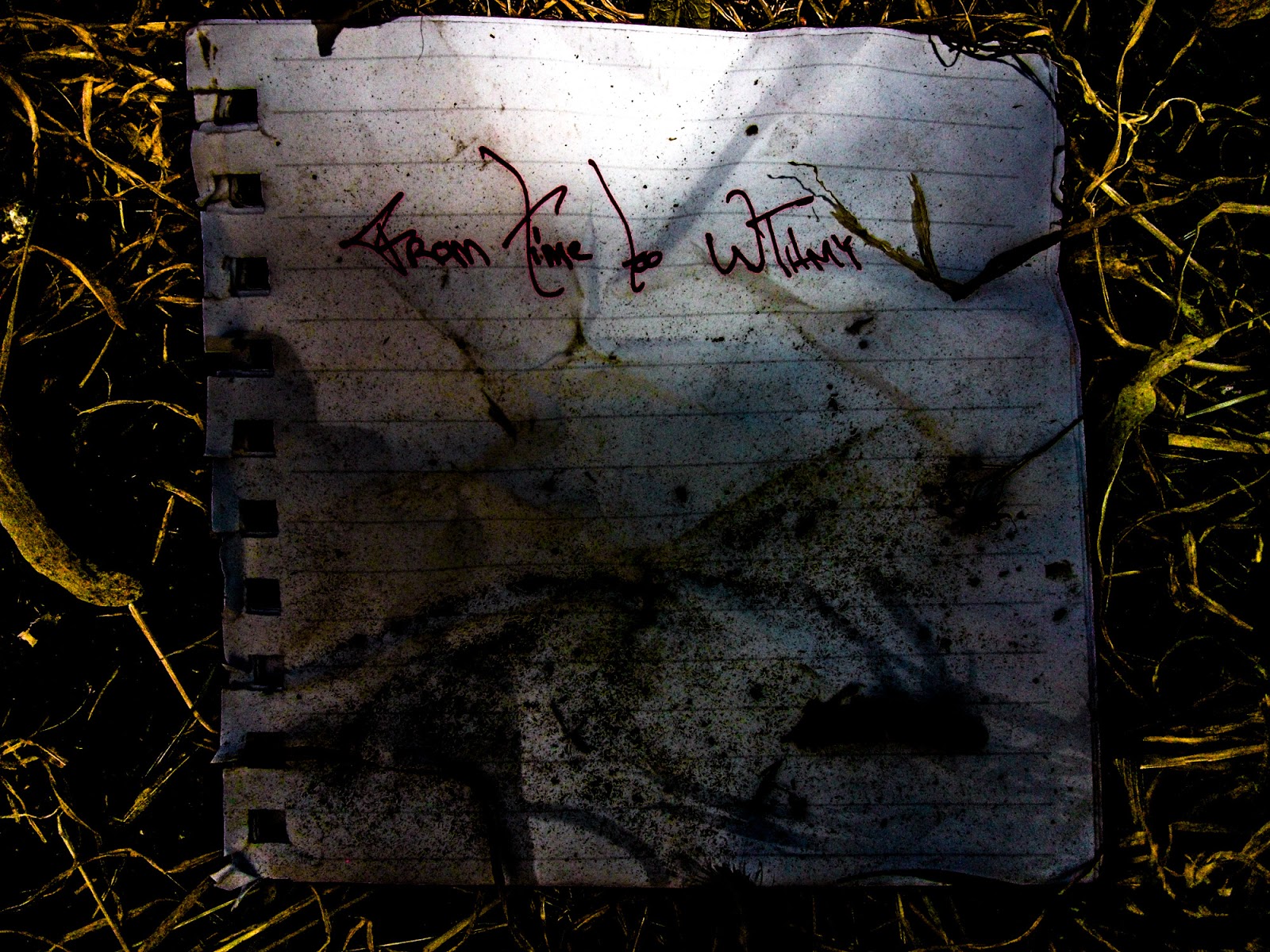
     I believe my work has fallen into all three of the categories at some point in my photography life. My favorite shooting technique is found subject matter. I like the spontaneity of going on a walk with a camera, searching for something interesting. It's how I usually work. I don't like to plan out shoots very much. Because of my love of finding subjects and simply photographing them without changing them, I think my work can fall into the documentary category.
     I think that my work can fall into the personal narrative category because I use photography as a personal outlet, however, I do not think I use this type as much as the other two.
     I think my work falls into imaginative quite often. I think it primarily fits into hyper real and


My Work:
Documentary: Found Subject Matter


My Work
Personal Photography:


My Work
Imaginative:


Other Examples of Categories:
New Physical Universe:
Image result for andrew ilachinski microsworlds
Andrew Ilachinski, from Microworlds
http://www.sudden-stillness.com/

From the illumitone fine art series simile photo collage by kim kauffman from multiple scans of original objects scanograph scannography
Kim Kauffman, Simile, from Illumitones
http://www.synecdochestudio.com/html_files/itones-simile.html

From the illumitone fine art series Polyrhythm photo collage by kim kauffman from multiple scans of original objects scanograph scannography
Kim Kauffman, Polyrhythmfrom Illumitones
http://www.synecdochestudio.com/html_files/itones-polyrhythm.html

New Psychological Universe:

Carol Golemboski, Safe, 2001, from Psychometry
http://carolgolemboski.com/psychometry_img.html


Carol Golemboski, Dr. French's Posteriors, 2003, from Psychometry
http://carolgolemboski.com/psychometry_img.html


Carol Golemboski, Dress Form #1, 1998, from Psychometry
http://carolgolemboski.com/psychometry_img.html


Tuesday, September 5, 2017

Abelardo Morell
Morell was born in Cuba during the Cold War, but his family later moved to New York in 1962. He is one of few artists who uses Camera Obscura. He projects images of cities such as Boston and New York inside rooms so that cover the walls and appear upside down. He blacks out the room and makes a 3/8 inch hole. He uses cliche verre, a "a technique of reproducing images which a glass plate coated with collodion is etched and photographed against a black background" as well as photograms.
The above quote is from:  https://www.icp.org/browse/archive/constituents/abelardo-morell?all/all/all/all/0

"Cuban-born photographer Abelardo Morell surveys both the intimate and the majestic in his photographs of American people, objects, and landscapes. Morell initially worked in the tradition of Lee Friedlander and Gary Winogrand, photographing street scenes in New York. His interests later shifted to a more intimate yet still pedestrian scale, capturing black-and-white images of domestic objects. In 1991, Morell returned to the street, shooting scenes on a grander scale with a self-constructed camera obscura. The return to this centuries-old technology allowed Morell to better understand the origins of his medium and capture cities at a scale he felt was appropriate for comprehending them. In recent years, he transformed his camera obscura into a mobile tent, moving it to locations throughout America to capture landscapes on a monumental scale." https://www.artsy.net/artist/abelardo-morell?

Image result for abelardo morell
CAMERA OBSCURA: VIEW OF CENTRAL PARK LOOKING NORTH – SUMMER, 2008
http://www.abelardomorell.net/project/camera-obscura/


CAMERA OBSCURA: IMAGE OF MILL ALLEY IN ROOM WITH DESK, LAWRENCE, MA, 2002
HTTP://WWW.ABELARDOMORELL.NET/PROJECT/CAMERA-OBSCURA/


CAMERA OBSCURA: THE EMPIRE STATE BUILDING IN BEDROOM, 1994
HTTP://WWW.ABELARDOMORELL.NET/PROJECT/CAMERA-OBSCURA/


CAMERA OBSCURA: IMAGE OF MILL ALLEY IN ROOM WITH DESK, LAWRENCE, MA, 2002
HTTP://WWW.ABELARDOMORELL.NET/PROJECT/CAMERA-OBSCURA/


CAMERA OBSCURA: TIMES SQUARE IN HOTEL ROOM, 2010
HTTP://WWW.ABELARDOMORELL.NET/PROJECT/CAMERA-OBSCURA/


CAMERA OBSCURA: 5:04 AM SUNRISE OVER THE ATLANTIC OCEAN. ROCKPORT, MASSACHUSETTS, JUNE 17TH, 2009
HTTP://WWW.ABELARDOMORELL.NET/PROJECT/CAMERA-OBSCURA/


CAMERA OBSCURA: VIEW OF EIFFEL TOWER IN THE HOTEL FRANTOUR, 1999
HTTP://WWW.ABELARDOMORELL.NET/PROJECT/CAMERA-OBSCURA/


CAMERA OBSCURA: IMAGE OF BOSTON’S OLD CUSTOMS HOUSE IN HOTEL ROOM, 1999
HTTP://WWW.ABELARDOMORELL.NET/PROJECT/CAMERA-OBSCURA/

Thursday, March 23, 2017

Emulation: Laszlo Moholy-Nagy
Laszlo Moholy-Nagy (1895-1946) was a Hungarian American photographer, designer, painter, filmmaker, sculptor, and theoretician. He was associated with the Bauhaus movement, which is named after an influential modernist art school at which Moholy-Nagy was a professor. He created theories regarding art education that centered on improving a student’s natural talent as opposed to teaching them specific, specialized skills. This contributed to his great influence on America’s post-war education.
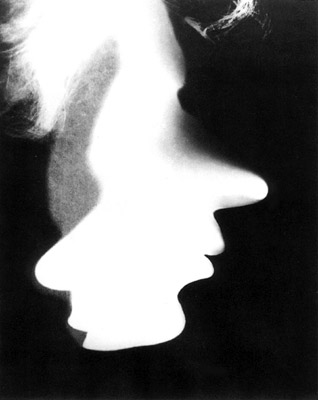
Moholy-Nagy coined the name “photogram,” although he was not the first person to make photograms. His photograms were created directly on film.” He created “light-space modulators,” which were oil paintings on polished or transparent surfaces that used “mobile light effects (britannica.com).” Throughout all his work, Moholy-Nagy had an interest in space, time, and light. His photography focused on the more abstract aspects of reality such as light and shadow, shape, space, and line. His paintings were of non-objective depictions of circles, lines, and rectangles. He created collages called photomontages that arranged cut out people and shapes on a white background. He also did typography for books and posters.
I knew I wanted to use his photograms as inspiration for a photo essay as soon as I saw them. I was drawn to his use of value and the interesting lines and shapes. What I most liked was his incorporation of people’s faces and hands in the photograms because I’d never seen that done before in a photogram. With my photo essay, I want to use interesting objects, magazine cutouts, and my hands and face in Moholy-Nagy inspired photograms. I will overlay objects and play with light and space just as he did.


Tuesday, February 14, 2017

Abstraction of the City


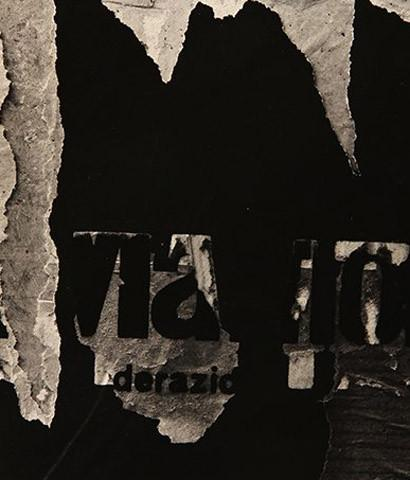
Jerome, Arizona 21, Aaron Siskind, 1949, silver gelatin print, 18 x 13.25 in.

North Carolina 30, Aaron Siskind, 1951
Silver print
14 × 11 in

Untitled (Martha's Vineyard), 1947, Aaron Siskind, 1947
Gelatin silver print
13 1/4 × 10 1/2 in

Rome 46 ,Aaron Siskind, 1973
Gelatin silver print
11 × 14 in

Chicago 24, 1965, 1965
Modern Silver Print
10.5 x 18 in.

Chicago 22, Aaron Siskind, 1949
Gelatin silver print, printed 1970s
8 1/2 × 14 in

Untitled, Cambridge, Massachusetts, Stanley Greenberg, 2002
Archival inkjet print
10 1/4 × 8 in

Valve Chamber, Shaft 2b, Stanley Greenberg, City Tunnel No. 3, Bronx, New York, 1992

Untitled, Toronto, Ontario, Stanley Greenberg, 2005, gelatin silver print, 27 ¾ x 35 ½ in.

Lower Gatehouse, New Croton Dam, Westchester County, New York, 2000, gelatin silver print, 27 ¾ x 35 ½ in.